Overview
Digital RFP turns a tender response from a long document into a connected system.
It was designed for the bid team: not only to write the response, but to use in client workshops, discussing potential solutions and how they match what the project needs to achieve, and to walk other stakeholders through the submission afterwards.
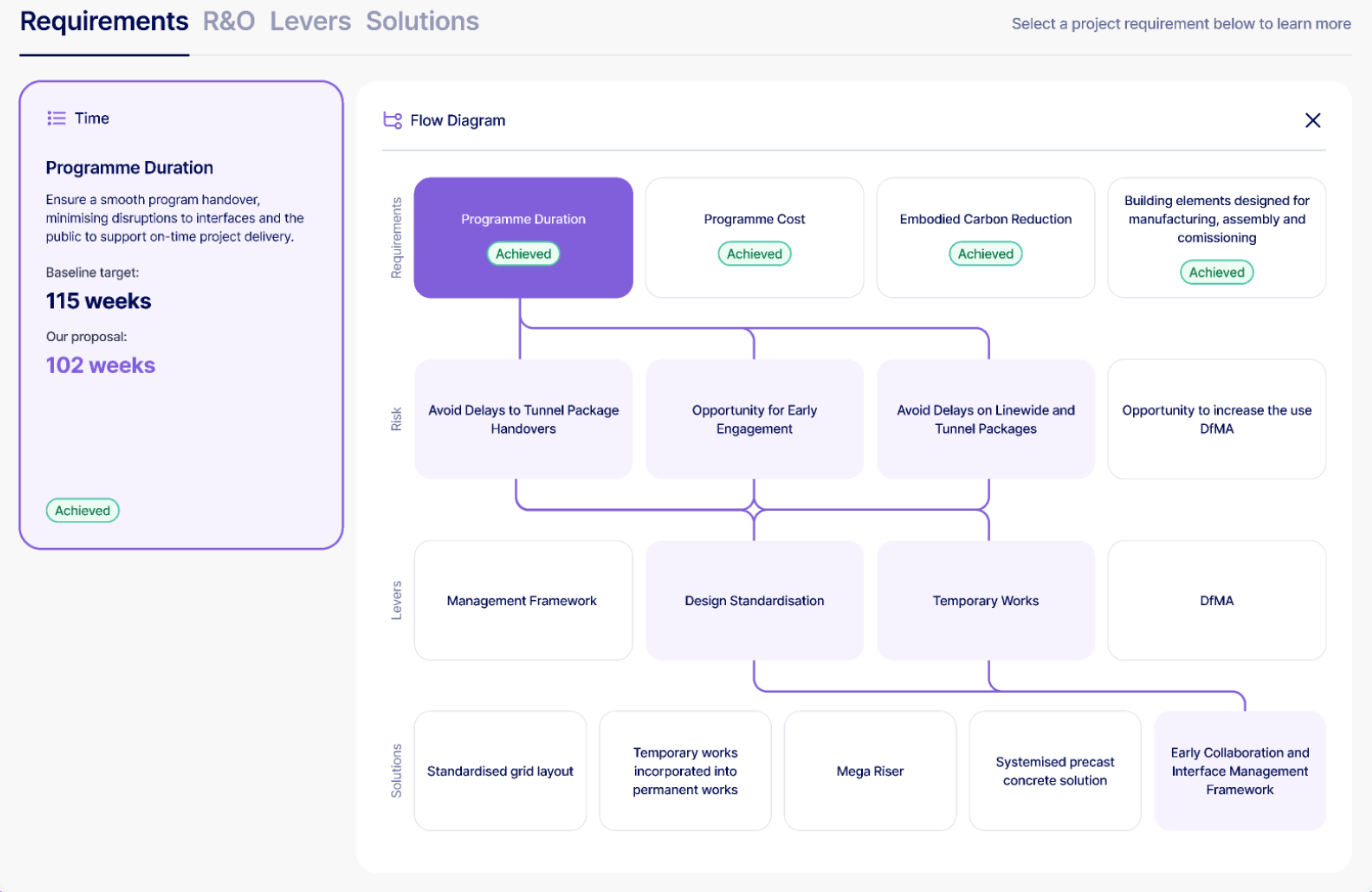
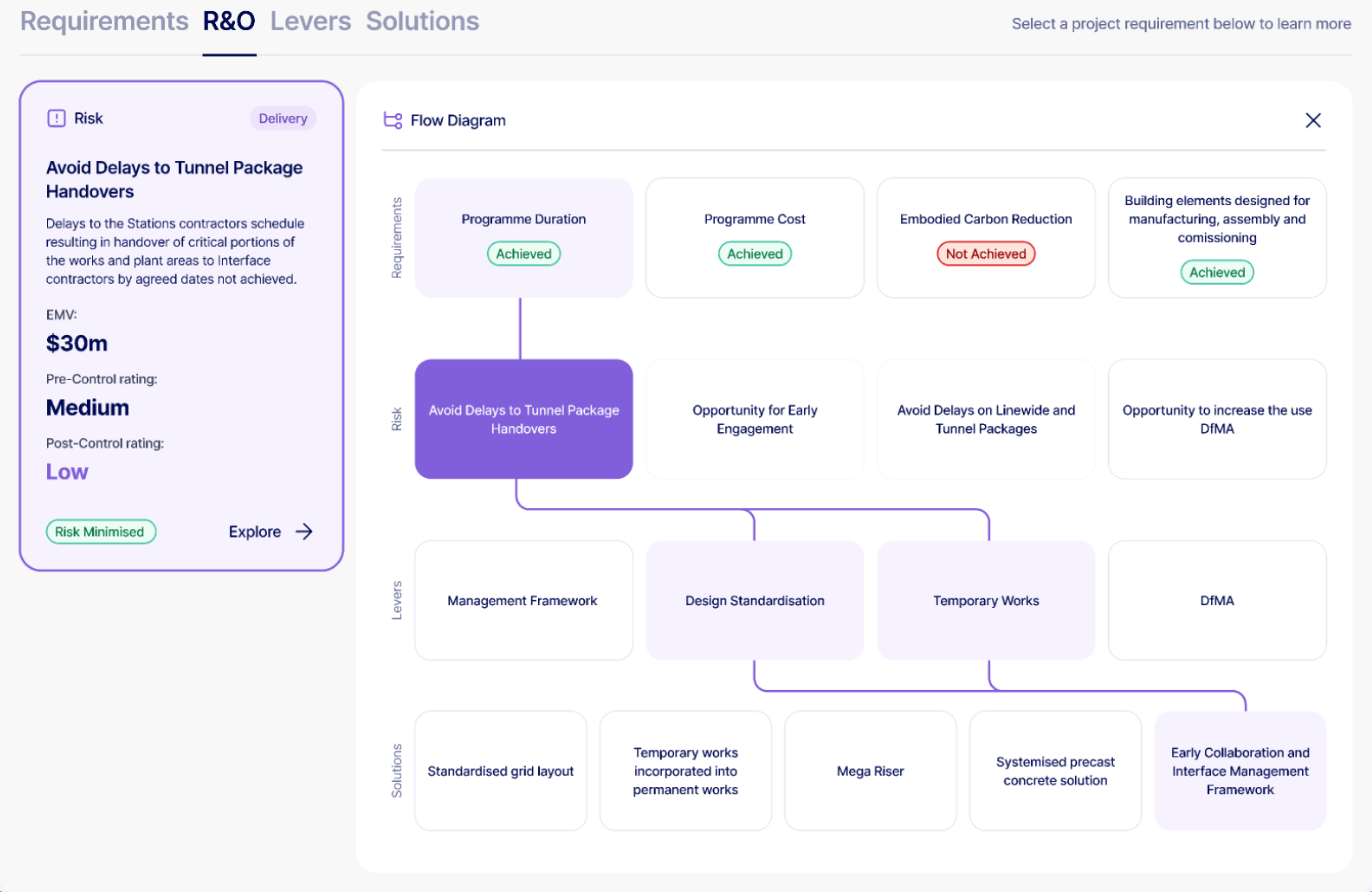
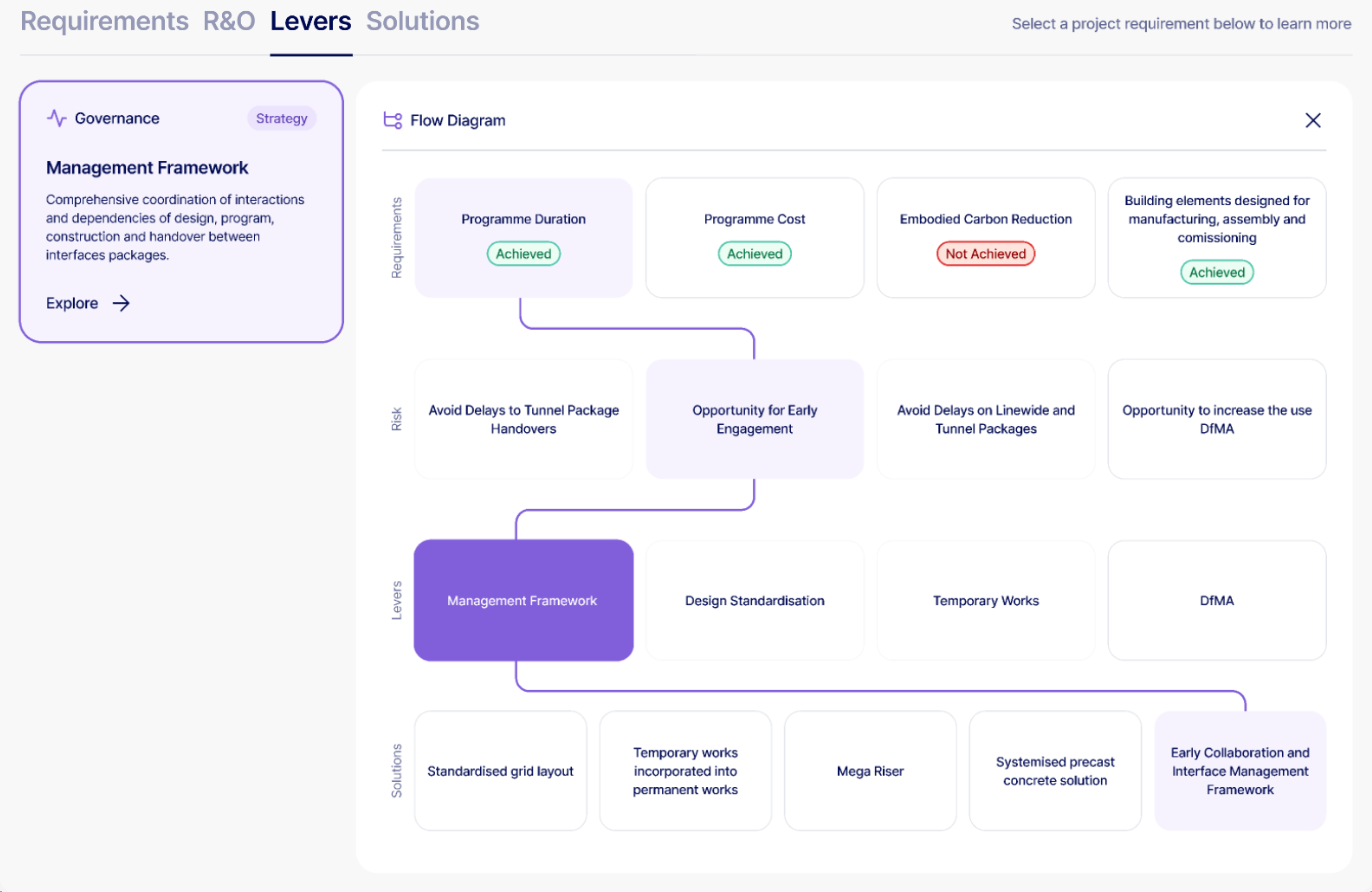
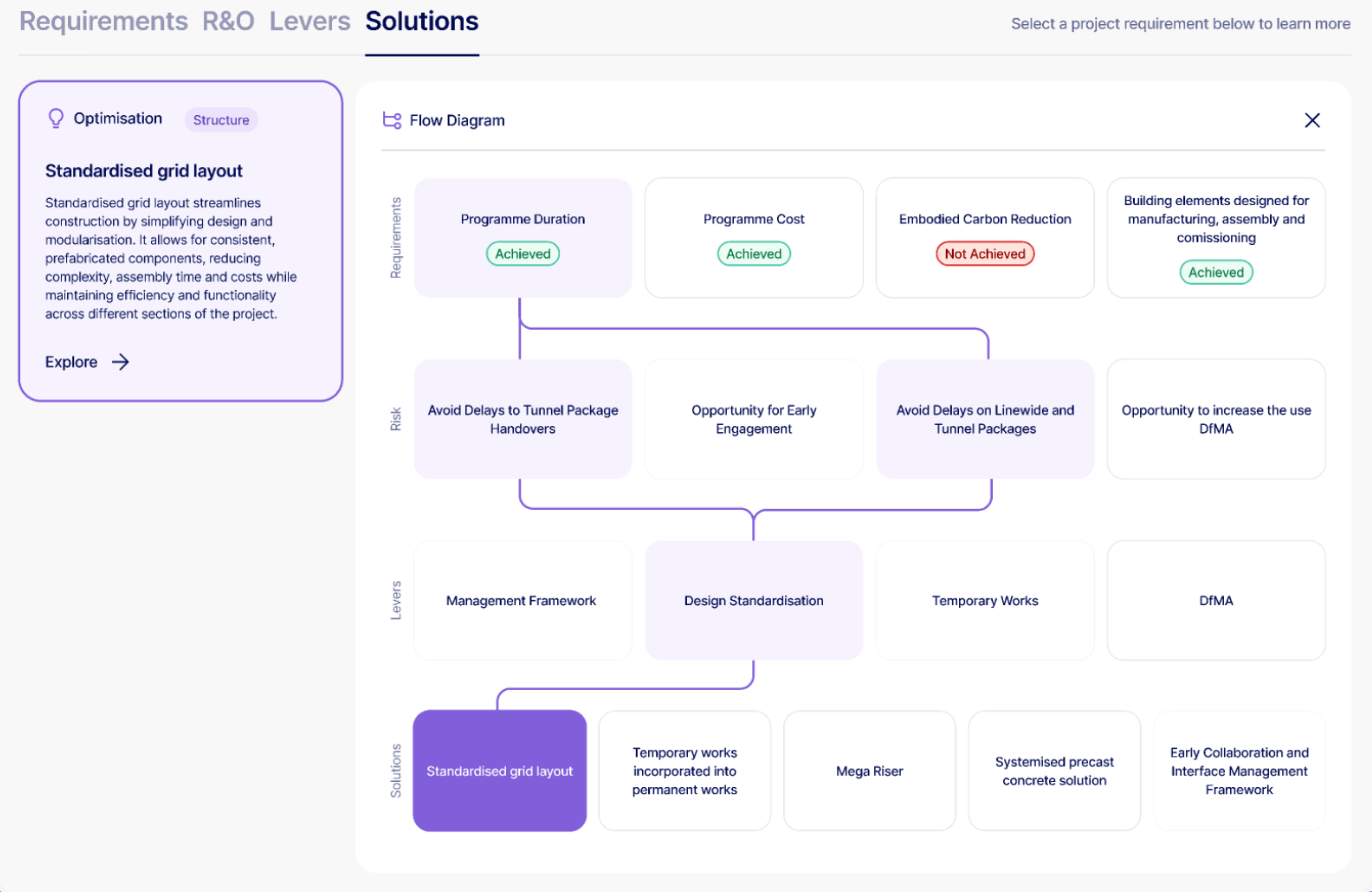
What I owned
I created the concept, built a concept prototype and wrote the requirements, then worked with the design consultancy N4 to turn it into a clickable prototype and component system.
- The concept. A tender response as a chain you can follow, from what the client asked for to what is proposed.
- The requirements. What the system had to hold and show, and how each part links to the next.
- Working with N4. Close collaboration with their designers through the UI and UX redesign.
- A leaner component system. N4’s first pass had a different component for almost every card. I cut the card types, and spotted that the benefit cards and the key facts and figures cards could share one modular card.
The problem
Tender responses are long documents, and it is hard to trace why a solution was proposed.
The client’s requirements sit at the start and the proposed solutions at the end. The reasoning in between, the risks and how they are managed, is buried in the text, so it is hard to check how a solution answers a requirement.
The solution
A connected chain
Each client requirement links to the risks and opportunities around it, the levers that manage them and the construction solutions that deliver it. Pick any element and the whole chain lights up. Levers are the actions a team can take to manage a risk or take an opportunity.
Designed with N4
I handed the concept and requirements to N4 and worked closely with their designers. N4 delivered a full Figma component system and a clickable prototype.
Outcome
In the prototype, the bid team can pick a requirement and follow every risk, lever and solution connected to it, whether in a client workshop or when walking stakeholders through the submission.
Delivery was deprioritised while the team focused on the agents, so it stayed a prototype.
What I learned
Here, a clickable prototype got the idea across far better than a requirements document.
Putting the chain in front of people as something they could click through made the concept easy to understand, discuss and get behind, in a way a dry requirements page never did, and it went on to shape how the agents were designed.
Agreeing a non-negotiable is not the same as understanding it.
Everyone agreed from the start that the relationships between records had to be easy to see, and N4 had my concept prototype to work from. Even so, early versions drifted from it once design began, and I held to that interaction, because without it there was no point building it. Looking back, I had not made the non-negotiables clear enough. Next time I would spell them out and communicate them much more clearly, so they are impossible to miss.